
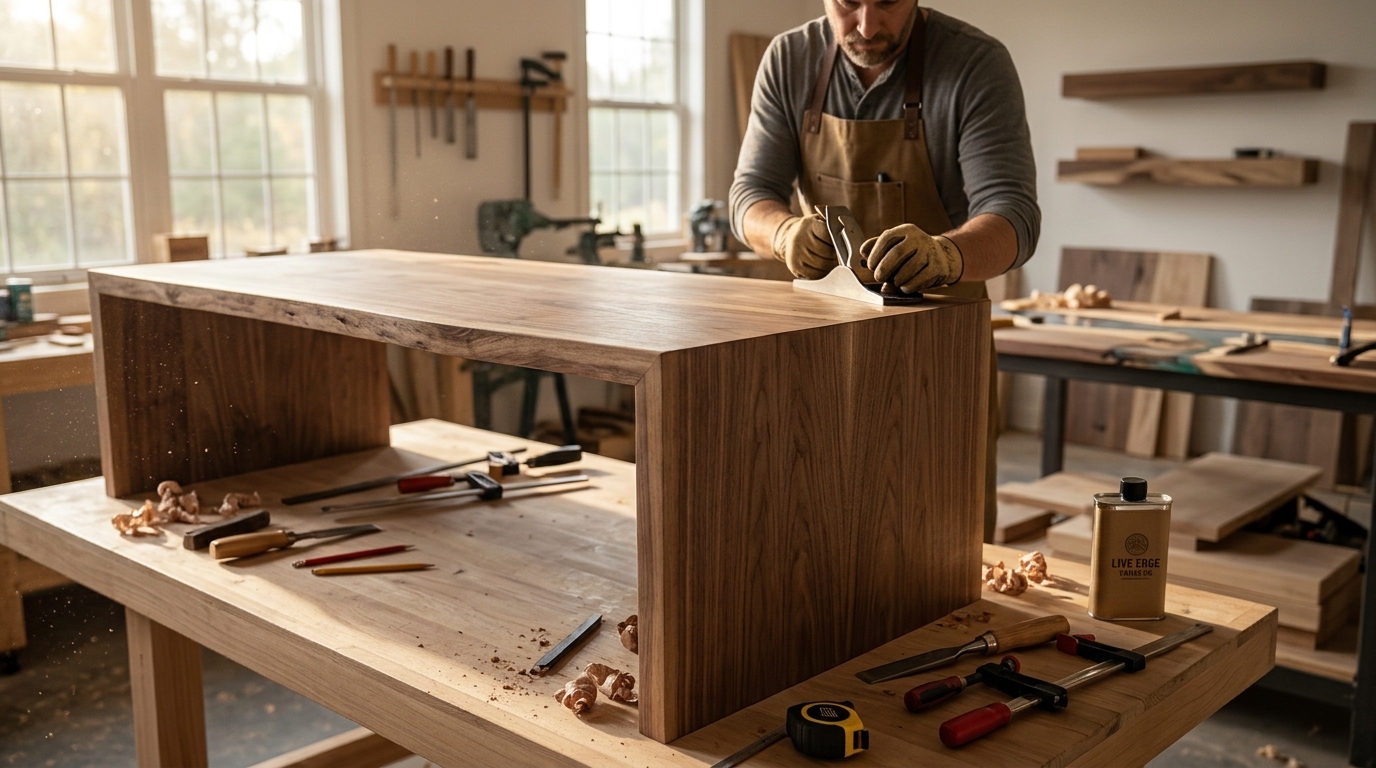
Achieving a seamless waterfall edge requires precise bookmatching, careful grain alignment, and a finish that unifies the top and the drop. The goal is to make the wood appear as one continuous piece flowing over the edge. Live Edge Tables Co. specializes in this technique, ensuring the transition from horizontal to vertical is invisible to the eye.
The Critical Role of Grain Alignment
Grain alignment is the foundation of a seamless waterfall joint. If the grain on the top surface does not continue perfectly onto the vertical edge, the joint will look like a seam. Woodworkers must select slabs where the grain runs parallel to the edge they intend to drop. This requires inspecting the raw material before any cutting begins. A slight deviation in grain direction can create a visual break that no amount of sanding can fix.
Bookmatching for Continuity
Bookmatching is a technique where two slabs are cut from the same log and flipped to mirror each other. This ensures the grain pattern flows continuously across the joint. When applied to waterfall edges, bookmatching guarantees that the figure on the top matches the figure on the side. This method is essential for species with prominent ray fleck or cathedral grain. It turns a potential weak point into a design feature.
Joinery Methods for Structural Integrity
Dovetail and Box Joints
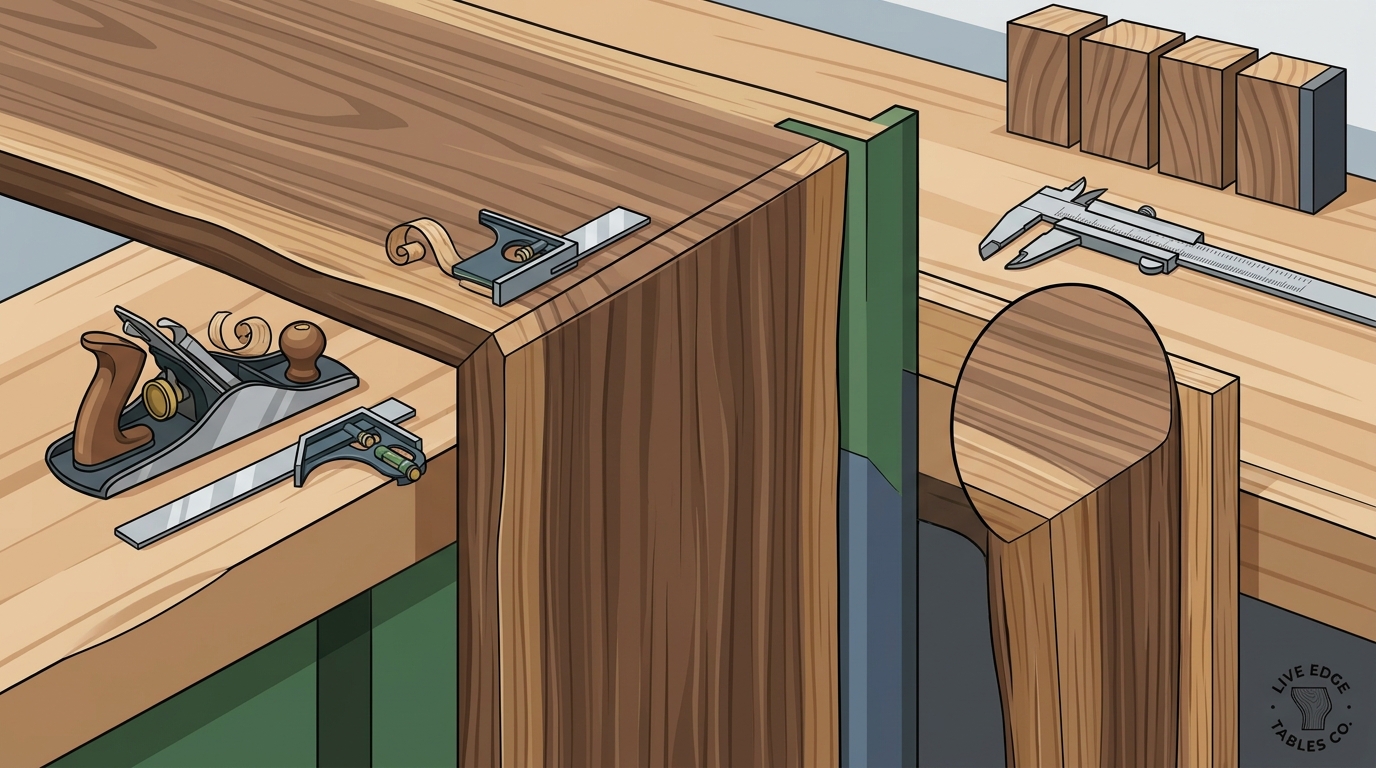
Dovetail and box joints provide strong mechanical interlocking. These joints resist racking and pulling apart. When executed with precision, the pins and tails can be made nearly invisible. The wood fibers interlock, creating a bond that is stronger than the wood itself. This method is ideal for hardwoods that do not glue well. It provides a robust connection that lasts for decades.
Glued Laminations
Finish Techniques for Visual Unity
The finish is the final layer that unifies the joint. A poor finish can highlight the seam, while a good one can erase it. Woodworkers use various finishes to achieve a seamless look. The choice of finish depends on the wood species and the desired sheen. Each finish interacts differently with the wood grain.
Oil and Wax Finishes
Oil and wax finishes penetrate the wood rather than sitting on top. This allows the grain to remain visible and natural. The finish does not create a barrier that can highlight a seam. It enhances the wood's natural color and texture. This method is popular for live edge and waterfall tables. It provides a soft, tactile surface that feels like raw wood.
Lacquer and Polyurethane
Lacquer and polyurethane create a hard, protective coating. These finishes can be sanded down to a smooth, glass-like surface. When applied correctly, they can hide minor imperfections in the joint. The high gloss can make the wood appear continuous. This method is durable and easy to clean. It is suitable for high-traffic dining tables.
Common Pitfalls to Avoid
Even experienced woodworkers can make mistakes that ruin a waterfall joint. Understanding common pitfalls helps ensure a successful outcome. The most frequent errors involve grain mismatch and finish application. Avoiding these mistakes saves time and material. It ensures the final piece meets the high standard of a seamless design.
Ignoring Wood Movement
Wood moves with changes in humidity and temperature. If the joint does not allow for this movement, it can crack. Woodworkers must design joints that accommodate expansion and contraction. This is especially important in Florida's humid climate. Ignoring wood movement leads to failed joints. Proper design prevents long-term structural issues.
Inconsistent Sanding
Inconsistent sanding can create a visible step at the joint. The woodworker must sand the top and edge to the same level. Any difference in height will be visible under light. This requires careful attention to detail. Using a straight edge helps ensure a flat, even surface. Consistent sanding is key to a seamless look.
Local Expertise in Sarasota and Naples
Local expertise is crucial for custom furniture in Southwest Florida. The climate here presents unique challenges for woodworkers. High humidity and salt air can affect wood stability. Steve Sushko, the master carpenter behind Live Edge Tables Co., has nearly twenty years of experience in this region. He understands how to acclimate wood for the Gulf Coast. His work ensures that tables are built to last in local conditions.
Acclimating Wood for Florida
Acclimating wood is a critical step in the building process. Wood must be stored in the environment where it will be used. This allows it to reach equilibrium with the local humidity. In Florida, this means accounting for high moisture levels. Proper acclimation prevents warping and cracking. It ensures the joint remains stable over time. This step is often overlooked by out-of-state manufacturers.
Delivery and Installation
Delivery and installation are part of the seamless experience. A table that is damaged in transit is not seamless. Live Edge Tables Co. handles delivery and installation from Sarasota to Naples. This ensures the piece arrives in perfect condition. The team positions the table carefully to avoid damage. They also check the level and stability of the base. This service adds value to the custom build.
Key Takeaways
- Grain alignment is the most critical factor in a seamless waterfall joint.
- Bookmatching ensures the grain pattern flows continuously across the joint.
- Dovetail and box joints provide strong mechanical interlocking for hardwoods.
- Oil and wax finishes penetrate the wood, hiding seams better than film finishes.
- Wood movement must be accounted for in joint design to prevent cracking.
- Local expertise is essential for acclimating wood to Florida's humid climate.
- Professional delivery and installation ensure the piece arrives in perfect condition.
Frequently Asked Questions
What is a waterfall edge table?
A waterfall edge table is a table where the grain of the wood runs over the edge and down to the floor. This creates a continuous, seamless look. The top and the sides appear to be one single piece of wood. This design is popular for its modern, organic aesthetic.
How do woodworkers hide the seam in a waterfall joint?
Woodworkers hide the seam by aligning the grain perfectly and using a finish that unifies the surface. Bookmatching the slabs ensures the grain flows continuously. A penetrating finish like oil helps blend the joint. Precise sanding removes any visible step.
Is a waterfall edge stronger than a live edge?
A waterfall edge is generally stronger because it uses the full thickness of the slab. The wood fibers run continuously over the edge, providing structural support. Live edge tables often have a thinner top with a separate base. The waterfall design offers better stability for heavy use.
Can any wood species be used for a waterfall table?
Not all wood species are suitable for waterfall tables. The wood must have a straight, continuous grain. Species with too much figure or irregular grain may not look seamless. Hardwoods like walnut and oak are popular choices. Softwoods can be used but require careful handling.
How long does it take to build a waterfall table?
Where can I find a custom waterfall table in Florida?
You can find custom waterfall tables in Florida by working with local master carpenters. Live Edge Tables Co. offers a design tool to help you visualize your table. They serve the Sarasota to Naples area. Their team handles everything from design to installation.
Conclusion
Creating a seamless waterfall edge table requires a combination of skill, precision, and local knowledge. The joint must be structurally sound and visually continuous. Woodworkers achieve this through careful grain alignment, robust joinery, and appropriate finishes. Live Edge Tables Co. brings nearly twenty years of experience to this craft. They understand the unique challenges of building in Southwest Florida. If you are looking for a custom table that fits your space and style, consider working with a local expert to start your commission today. Learn more: Start a Custom Woodwork.