
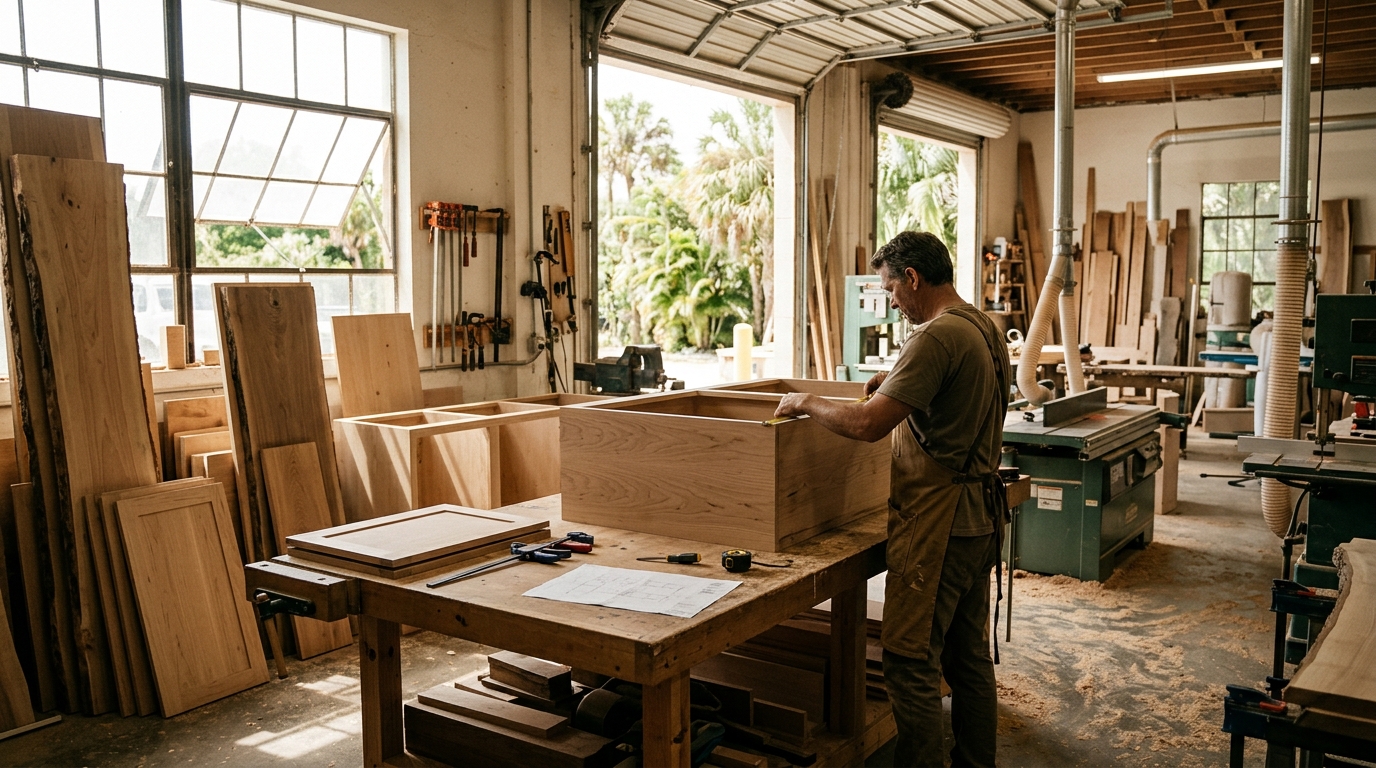
Custom cabinetry in Sarasota requires a builder who understands local humidity, precise measurement, and long-term durability. You need a partner who can translate your vision into functional woodwork that fits your home's specific dimensions. A local master carpenter can provide handcrafted solutions that serve the Southwest Florida region.
Why Florida Humidity Changes Everything
Wood is a living material that reacts to its environment. In Sarasota, high humidity and salt air cause wood to expand and contract significantly. A standard cabinet built in a dry climate may warp or crack in a Florida home. Acclimation is the critical first step in any custom woodwork project. Builders must allow raw slabs and boards to adjust to your home's specific moisture levels before cutting and assembly. This process prevents gaps, warping, and finish failure down the line. Professional shops acclimate slabs before they are worked, ensuring the final piece remains stable in the Gulf Coast climate.
The Difference Between Stock and Custom Fit
Stock cabinetry comes in standard sizes that rarely match a unique architectural space. Custom cabinetry is defined by its ability to fit irregular walls, awkward corners, and specific functional needs. A builder must measure to the eighth of an inch to ensure doors close properly and shelves align. This level of precision requires experience with historic renovations and custom homes. Steve Sushko, the master carpenter behind the shop, spent nearly twenty years on custom home builds and historic renovations in Philadelphia. That background means he knows how to make new trim disappear into old walls and how to scribe a board to a surface that hasn't been straight in a century.
Choosing Wood for Coastal Durability
Not all woods perform equally in coastal environments. You must select species that resist moisture and decay. Black walnut is a classic choice for its stability and rich color. Pecky cypress, Florida's own native wood, features fungus-carved pockets that make every slab unique. Bald cypress is honey-gold and tight-grained, making it exceptionally resistant to local humidity. When selecting materials, ask the builder about their sourcing and how they treat the wood. An online design tool allows you to visualize these options, including black walnut, pecky cypress, and white oak, before committing to a build.
The Measurement and Design Phase
Many custom projects fail because the initial measurement was rushed. A professional builder will visit your home to measure the space and understand how you actually use the room. This is not just about width and height; it is about workflow and access. For countertops, islands, and built-ins, the builder needs to see how you move through the space. A design and measure visit allows the builder to come to your home, measure the space, and draw up a plan. This visit fee is credited toward your project when you proceed, ensuring you get a firm quote based on reality, not guesswork.
Finishes for Real Life
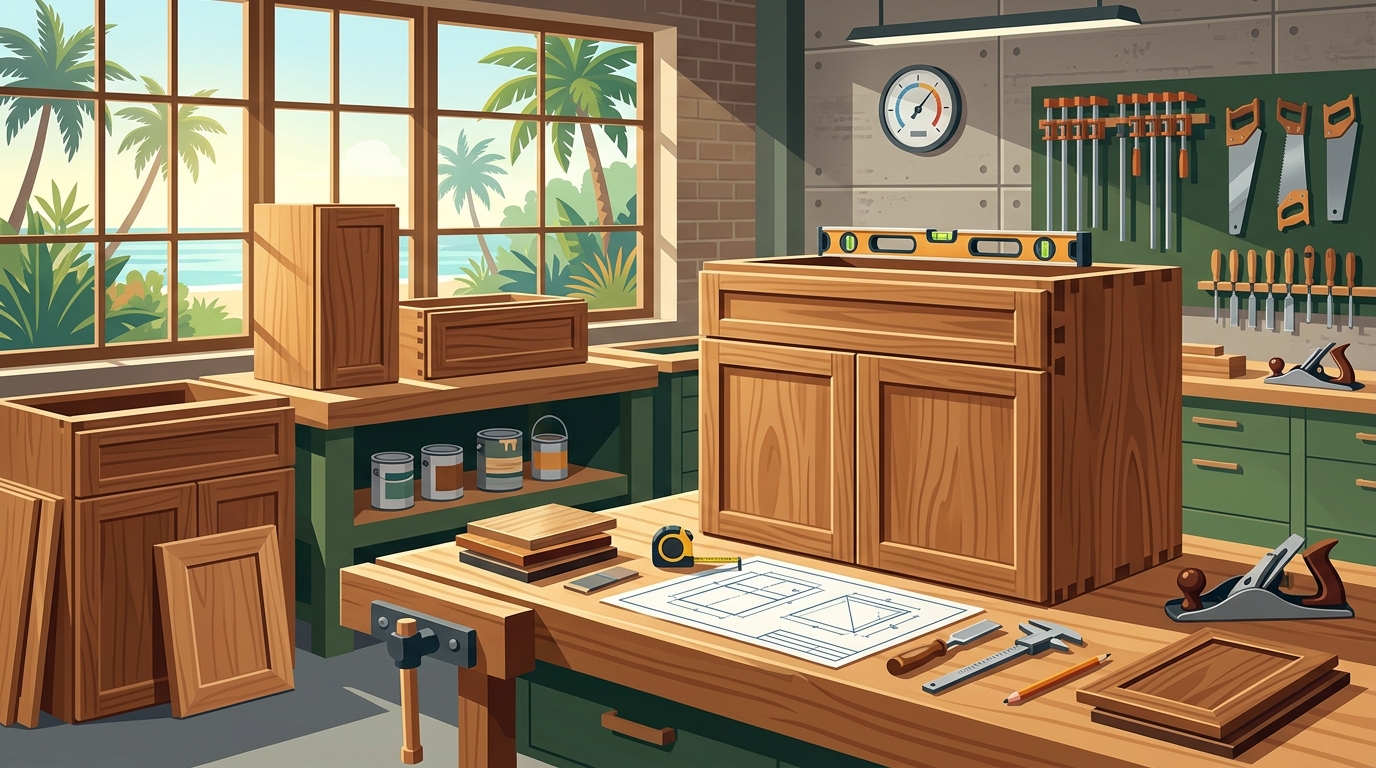
The finish you choose determines how your cabinetry ages and how you maintain it. Hardwax oil provides a matte look that feels like wood, not plastic, and allows for easy spot repairs at home. Hand-rubbed tung oil offers a low luster, warm depth that requires multiple thin coats. Satin lacquer is tough and wipe-clean, making it ideal for households with children or frequent entertaining. Epoxy flood coat creates a high-gloss, glass-deep surface that protects the wood from spills. Each finish has trade-offs in durability and maintenance. Discuss these options with your builder to find the balance between aesthetics and practicality for your specific lifestyle.
Key Takeaways
- Wood moves in Florida humidity; acclimation is non-negotiable for stability.
- Custom cabinetry requires measurement precision down to the eighth of an inch.
- Native woods like pecky cypress and bald cypress perform well in coastal climates.
- A site visit is essential for accurate design and firm pricing.
- Finish selection impacts both durability and long-term maintenance effort.
- One maker handling the project from start to finish ensures consistency.
Frequently Asked Questions
How long does custom cabinetry take to build?
Lead times vary based on complexity and wood availability. Smaller pieces like floating shelves may take two to three weeks. Larger projects like dining tables or full built-ins can take several months. The builder should provide a clear timeline during the design phase.
Can I change the design after reserving a build slot?
Yes, changes are often possible during the design conversation. Size, base, and finish can usually be adjusted right up until the slab is cut. Once the wood is cut, major changes become difficult or impossible.
What is the difference between a live edge and a river table?
A live edge table features natural edges on both long sides with no resin. A river table uses two slabs with live edges facing each other, with resin poured in the gap between them to create a river effect.
Do you deliver and install in Sarasota?
Yes, the shop serves the area from Sarasota to Naples. Delivery and installation are available for local clients, ensuring the piece is placed and secured correctly.
How do I maintain a hardwax oil finish?
Hardwax oil finishes are easy to maintain. You can spot-repair scratches or wear at home by applying a small amount of oil to the affected area. This makes it a practical choice for high-use areas.
Start Your Custom Project
Choosing the right builder for custom cabinetry in Sarasota means finding someone who respects the material and understands the local environment. You need a partner who will measure carefully, acclimate the wood, and build with precision. To start your commission, reach out to the maker directly. Tell Steve what you are picturing, and he will help you shape your vision into a piece that fits your home perfectly. Learn more: Start a Custom Woodwork.