
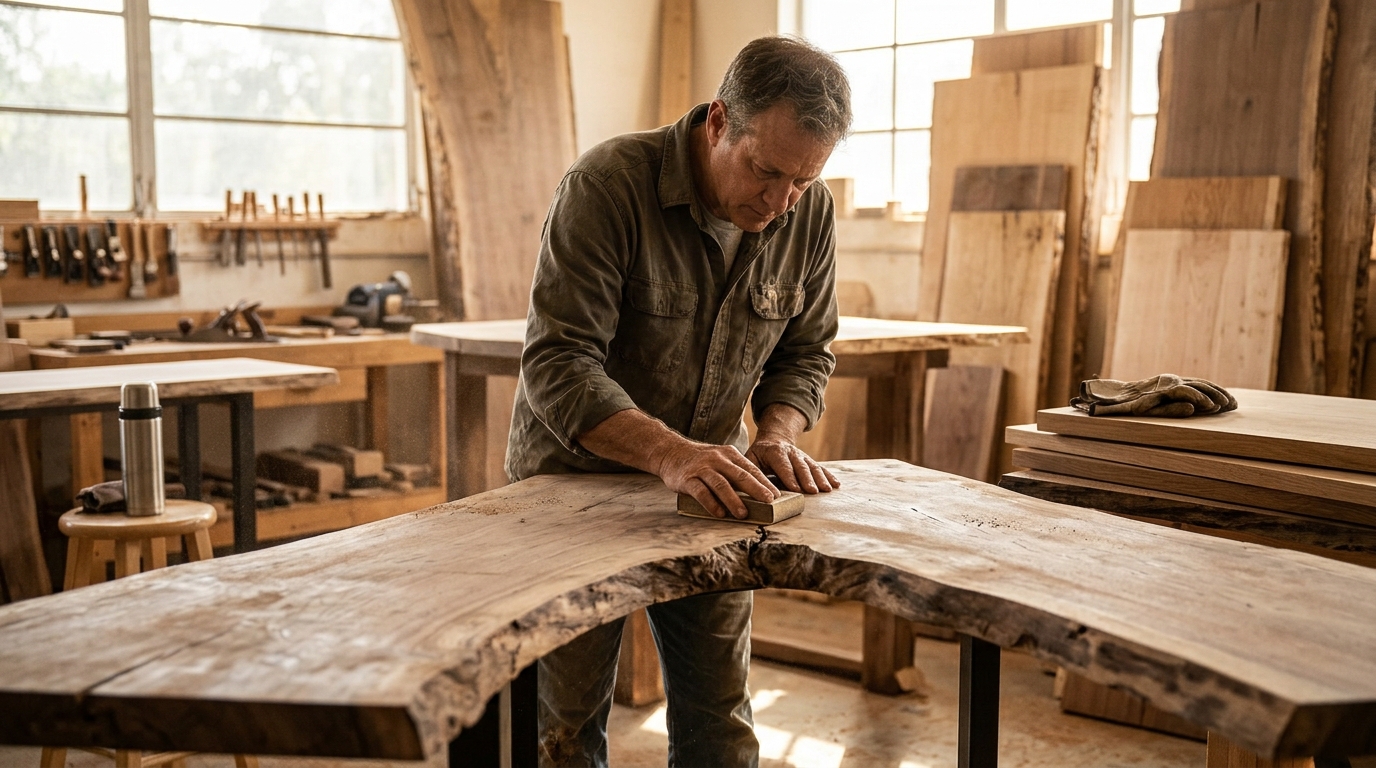
Custom furniture wait times typically range from two to twelve weeks, depending on complexity and shop capacity. At Live Edge Tables Co., smaller pieces like serving boards take two to three weeks, while complex dining tables require longer lead times. Understanding these production windows helps you plan your home renovation or design project effectively.
Production Capacity and Shop Workloads
Production capacity is the maximum amount of work a shop can complete in a given period. Most local woodworking shops operate with limited bench space and a small number of skilled artisans. This constraint directly impacts how quickly they can accept new orders. When a shop is fully booked, new commissions enter a queue, extending the wait time.
At Live Edge Tables Co., every piece is designed and built by a single master carpenter, Steve Sushko. This one-maker model ensures high quality but creates a natural bottleneck. The shop serves clients from Sarasota to Naples, and each project requires dedicated attention from start to finish. Because the maker handles every step, from slab selection to final installation, the schedule reflects a careful balance of quality and throughput.
Implication: If you need a piece urgently, check the shop's current availability before committing. A shop with a single artisan may have a longer wait than a factory with assembly lines, but the result is a bespoke piece with consistent craftsmanship.
Project Complexity and Material Sourcing
Project complexity is the degree of detail and structural challenge involved in a build. Simple items like floating shelves or serving boards require less time than large dining tables with resin rivers. The complexity of the joinery, the type of finish, and the size of the slab all add hours to the production process.
Material sourcing also plays a critical role. Live edge slabs are natural products, and finding the right piece with the desired grain and edge profile can take time. At Live Edge Tables Co., slabs are acclimated to Florida humidity before work begins. This acclimation period is essential to prevent warping or cracking later. For example, a black walnut river table requires two slabs to be matched, cut, and joined with resin, which adds significant curing and sanding time.
Implication: More complex designs and harder-to-source woods will always take longer. If you have a specific slab in mind, discuss sourcing timelines early. If you are flexible on wood species, the shop may have stock available, reducing the wait.
Finishing and Curing Times
Finishing is the process of applying protective coatings to the wood surface. Different finishes require different drying and curing times. Oil-based finishes like tung oil or hardwax oil need multiple thin coats, each requiring time to dry and be rubbed in. Epoxy resin, used in river tables, requires 24 to 48 hours to cure fully before sanding.
At Live Edge Tables Co., the choice of finish affects the timeline. A hand-rubbed tung oil finish involves many thin coats applied by hand, which is time-intensive but yields a warm, deep look. A satin lacquer or epoxy flood coat is faster to apply but requires careful environmental control to avoid dust or bubbles. The shop selects finishes based on the client's lifestyle and the piece's intended use.
Implication: Ask about the finishing process when discussing timelines. A high-gloss epoxy finish may look dramatic but adds curing time. An oil finish is easier to repair at home but requires more initial labor. Understanding this helps you set realistic expectations for when the piece will be ready.
Seasonal Demand and Scheduling
Seasonal demand is the fluctuation in customer orders based on the time of year. Woodworking shops often experience peaks in spring and fall, when homeowners start renovation projects. During these periods, wait times can extend as the shop fills its schedule. In contrast, winter months may see slower demand, potentially allowing for quicker turnaround.
Live Edge Tables Co. serves the Southwest Florida market, where construction and renovation activity is relatively year-round due to the mild climate. However, holidays and summer vacations can still impact scheduling. The shop uses a deposit system to reserve build slots, which helps manage capacity and ensures clients have a guaranteed place in the queue. This system provides clarity on when work will begin and when the piece will be delivered.
Implication: Plan your project around the calendar. If you need a table for a specific event, book early. Using a deposit to reserve a slot is a common practice that protects both the client and the shop. It ensures the shop can plan its workflow and the client knows exactly when to expect their piece.
Communication and Design Phases
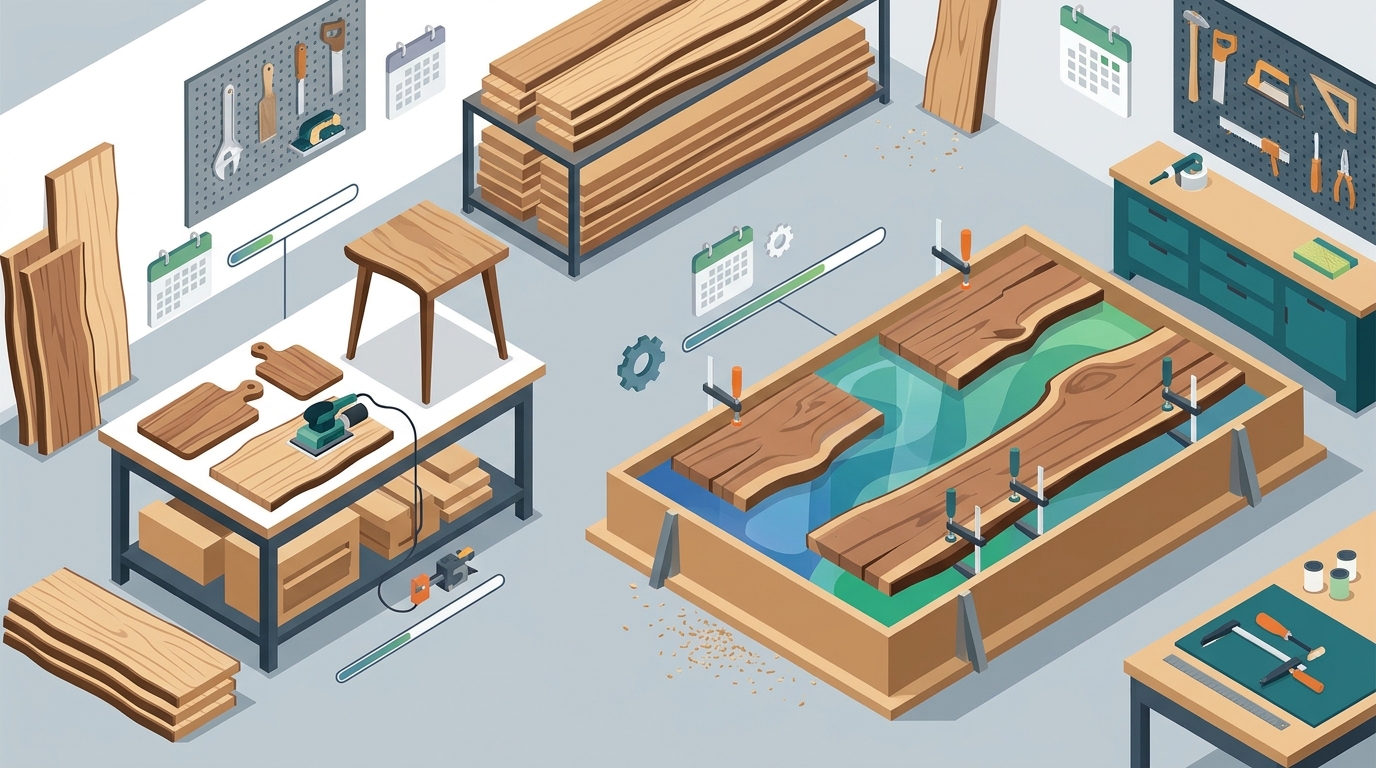
Communication is the exchange of information between the client and the maker during the design and build process. Custom furniture is not a one-size-fits-all product. It requires back-and-forth discussions about dimensions, wood species, style, and finish. This design phase can take days or weeks, depending on how quickly the client provides feedback.
At Live Edge Tables Co., the design process is collaborative. Steve Sushko works with clients to shape their vision, whether they have a clear idea or need guidance. The shop offers a design and measure visit, where Steve comes to the home to take measurements and discuss the project. This visit is credited toward the final project cost. Clear communication during this phase prevents delays later in the build.
Implication: Be responsive during the design phase. Delays in providing feedback or making decisions can push back the entire timeline. A dedicated design visit can streamline this process and ensure the final piece fits your space perfectly.
Key Takeaways
- Typical wait times for custom furniture range from two to twelve weeks, depending on complexity.
- Production capacity is limited by the number of skilled artisans and bench space in the shop.
- Material sourcing and acclimation add time, especially for live edge slabs in humid climates.
- Finishing methods, such as oil vs. epoxy, significantly impact curing and drying times.
- Seasonal demand can extend wait times, so plan your project around the calendar.
- Clear communication and prompt feedback during the design phase prevent schedule delays.
- Using a deposit to reserve a build slot ensures a guaranteed place in the production queue.
Frequently Asked Questions
How long does it take to make a custom live edge table?
A custom live edge table typically takes four to eight weeks, depending on the size, wood species, and finish. Complex designs with resin rivers may take longer due to curing times.
Can I get a custom piece faster if I choose a simpler design?
Yes, simpler designs with fewer details and standard finishes can be completed more quickly. A simple live edge coffee table may take less time than a large river dining table.
Does the wood species affect the wait time?
Yes, some woods are harder to source or require longer acclimation periods. Exotic species or large slabs may take longer to find and prepare than common woods like white oak.
What happens if I need to change my mind after ordering?
Changes after the build has started may incur additional costs or delays. It is best to finalize all design decisions during the initial consultation to avoid disruptions.
How does the deposit system work?
A deposit reserves your place in the build schedule and is credited toward the final price. This ensures the shop can plan its workflow and guarantees your project a start date.
Can I visit the shop to see the progress of my piece?
Many shops, including Live Edge Tables Co., welcome client visits to the workshop. You can see your piece in progress and discuss any final details with the maker.
Plan Your Custom Build with Confidence
Understanding the factors that influence wait times helps you plan your custom furniture project effectively. By considering production capacity, complexity, finishing, and seasonal demand, you can set realistic expectations. At Live Edge Tables Co., the focus is on quality and collaboration, ensuring your piece is built to last. To start your project, to discuss your vision and reserve a build slot.