
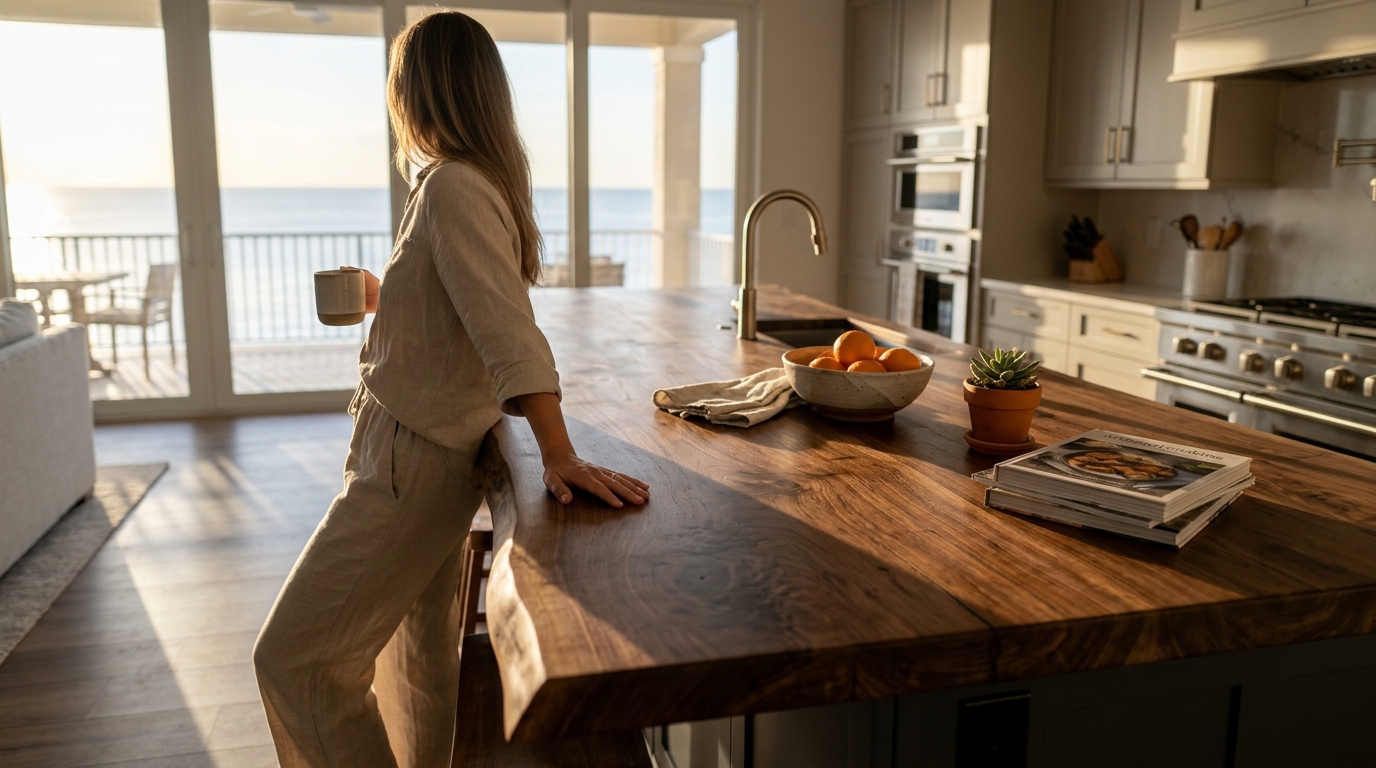
Choosing a custom walnut countertop requires balancing aesthetic appeal with structural integrity and environmental durability. Homeowners in Southwest Florida face unique challenges, including high humidity and salt air, which demand specific material treatments. Live Edge Tables Co. specializes in crafting these bespoke pieces, ensuring that every slab is acclimated and finished to withstand the Gulf Coast climate while maintaining its natural beauty.
1. Proper Acclimation to Local Humidity
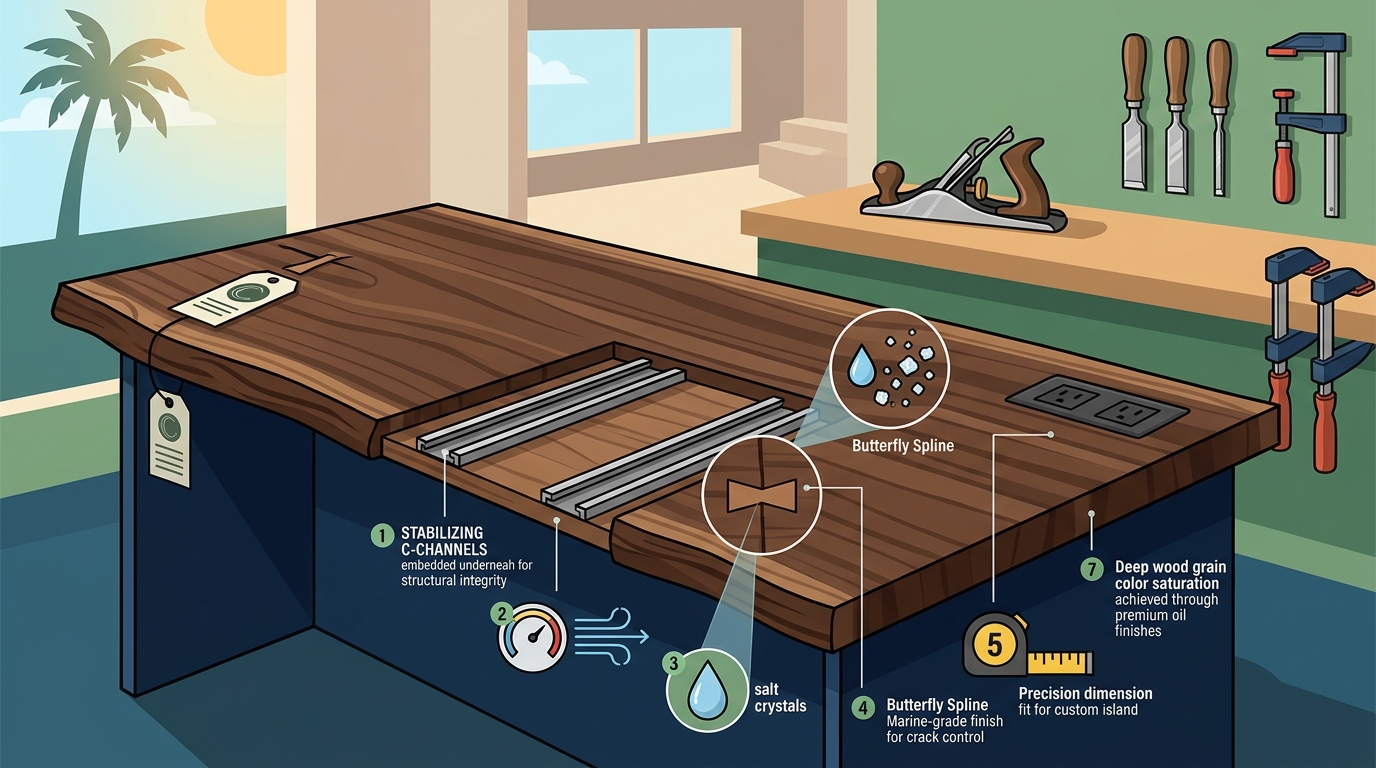
Wood must stabilize in your specific environment before installation to prevent warping. Walnut is a hygroscopic material, meaning it absorbs and releases moisture from the air. In Florida, the humidity levels fluctuate significantly between seasons. A slab that has not been properly acclimated in a local shop will likely move, crack, or warp after installation. Live Edge Tables Co. ensures that all slabs are acclimated in their Southwest Florida workshop before any work begins, guaranteeing dimensional stability for the life of the piece.
2. High-Performance Finish Selection
The finish must protect against heat, water, and UV degradation without masking the grain. Standard polyurethanes can yellow over time and may not handle the thermal shock of hot pans well. Hardwax oil finishes are often preferred for custom walnut countertops because they penetrate the wood, offering a natural feel and easier repair if a scratch occurs. The finish should be chosen specifically for its resistance to the local environment, including salt air exposure common in coastal areas like Sarasota and Naples.
3. Structural Support and Hidden Hardware
4. Edge Profile and Safety Considerations
The edge treatment determines both the visual style and the safety of the kitchen space. A live edge retains the natural contour of the tree, offering an organic look but requiring careful rounding to prevent sharp corners. A squared edge provides a modern, clean line that is easier to clean and safer for children. The choice between these profiles should align with the overall design aesthetic of the kitchen. Live Edge Tables Co. offers both options, allowing clients to select the edge profile that best fits their functional needs and visual preferences.
5. Grain Pattern and Color Consistency
Understanding the specific characteristics of the walnut slab ensures the desired visual impact. Walnut ranges from light chocolate to deep brown, with varying degrees of figure and grain movement. Some slabs feature dramatic cathedral grain, while others have a more subtle, straight pattern. Bookmatched slabs can create a symmetrical, high-end look for islands or vanities. It is essential to view the actual slab or high-resolution photos before committing, as no two pieces of walnut are identical. The maker should guide you in selecting a slab that complements the existing cabinetry and flooring.
6. Precision Fit for Existing Cabinetry
Custom countertops must fit the existing structure to the eighth of an inch. Unlike stock countertops, custom walnut pieces are built to match the exact dimensions of your kitchen. This requires precise on-site measurements and an understanding of how the wood will interact with the surrounding cabinets. Any discrepancy in measurement can lead to gaps or misalignment that are visible and frustrating. A professional design and measure visit ensures that the final product fits seamlessly into the space, accounting for any irregularities in the existing construction.
7. Maker Expertise and Local Delivery
Working with a local master carpenter ensures quality control and proper installation. The person who designs the countertop should be the same person who builds and installs it. This continuity of care ensures that any issues are addressed immediately and that the final result matches the vision. Local makers understand the specific challenges of the region, from humidity to delivery logistics. Live Edge Tables Co. serves the area from Sarasota to Naples, providing a direct line of communication from initial consultation to final installation.
Choosing the Right Features for Your Space
Selecting the right features depends on your specific kitchen layout and lifestyle. If you have a high-traffic family kitchen, prioritize a durable finish and a squared edge for safety. If you are looking for a statement piece in a dining area, a live edge with a dramatic grain pattern may be more appropriate. Consider the long-term maintenance you are willing to perform and the structural requirements of your cabinetry. By focusing on these seven key features, you can ensure that your custom walnut countertop is both beautiful and functional for years to come.
Frequently Asked Questions
How long does it take to build a custom walnut countertop?
Lead times vary depending on the complexity of the design and the current workload of the shop. Typically, a custom walnut countertop takes several weeks to complete, including the time required for the wood to acclimate in the local environment. It is best to discuss your timeline with the maker early in the process to ensure it aligns with your renovation schedule.
Can walnut countertops be used in a kitchen with high humidity?
Yes, provided the wood is properly acclimated and finished with a high-performance product. Florida’s humidity can cause wood to expand and contract, but a stable slab with a suitable finish will handle these changes well. The key is to ensure the wood has been stored in a similar environment before installation.
What is the difference between a live edge and a squared edge?
A live edge retains the natural contour of the tree, offering an organic and unique look. A squared edge is milled straight, providing a modern and clean appearance. The choice is largely aesthetic, but the live edge requires more careful handling to ensure safety and stability.
Do I need to seal a walnut countertop?
Yes, all wood countertops require a protective finish to resist water, heat, and stains. The type of finish, such as hardwax oil or polyurethane, will determine the level of protection and the maintenance required. Regular reapplication of the finish may be necessary to maintain its protective properties over time.
Can I install a custom walnut countertop myself?
While it is possible to install a countertop yourself, it is recommended to have a professional handle the installation, especially for heavy slabs or floating designs. Proper installation requires precise leveling and secure attachment to the cabinetry. A professional ensures that the weight is distributed correctly and that the finish is not damaged during the process.
How do I maintain a custom walnut countertop?
Maintenance involves regular cleaning with a mild soap and water, avoiding harsh chemicals. You should also periodically reapply the finish to maintain its protective qualities. Avoid leaving hot pans directly on the surface, and use trivets or coasters to protect the wood from heat and water damage.
Start Your Custom Walnut Project
Ready to transform your kitchen with a bespoke walnut countertop? Live Edge Tables Co. offers a dedicated design and measure visit to ensure your vision is realized with precision. to discuss your project and schedule a consultation with Steve Sushko, master carpenter.