
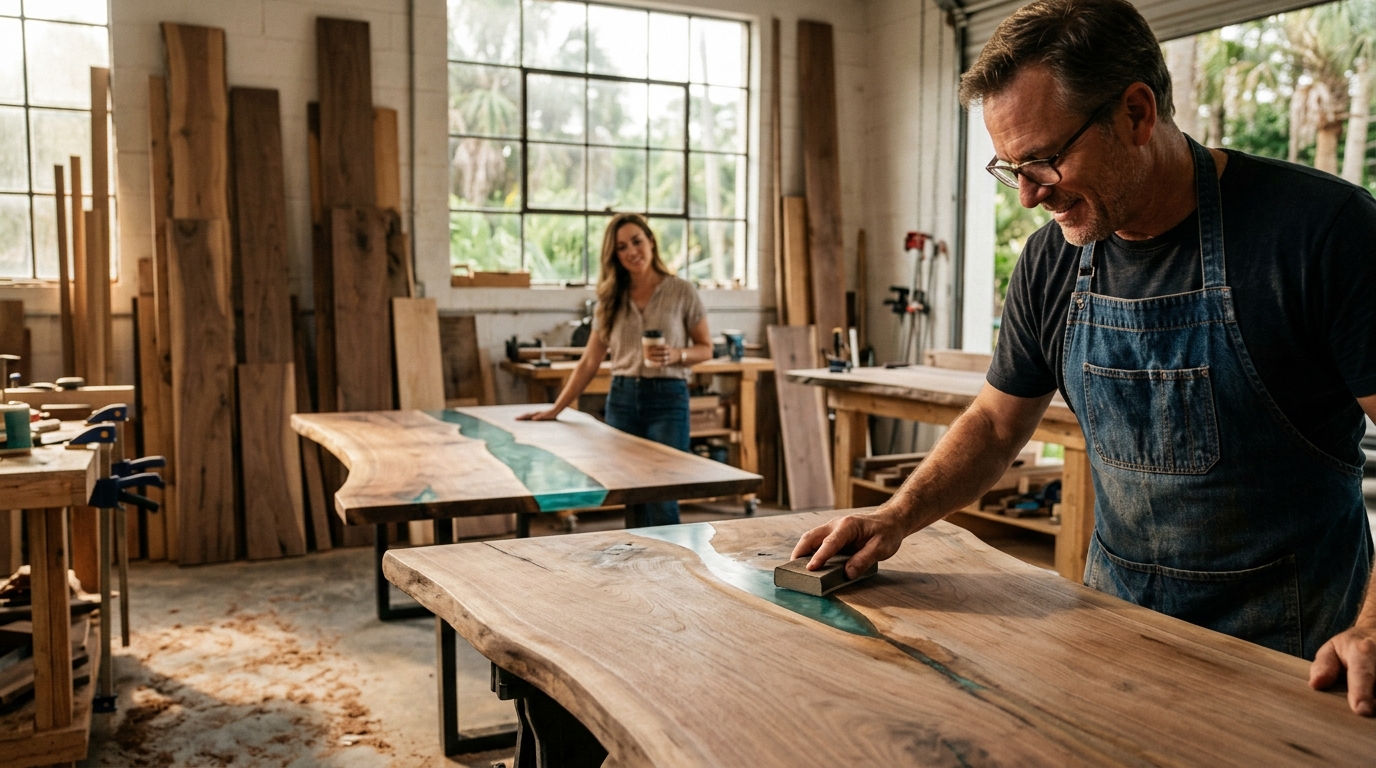
Florida artisan woodworkers differ from mass-produced furniture companies by prioritizing one-of-a-kind craftsmanship, local material acclimation, and direct maker-client relationships. Instead of shipping standardized units from overseas warehouses, local makers build custom pieces that fit specific architectural spaces and environmental conditions. This approach ensures durability, unique aesthetics, and precise fit for high-end residential projects across the Gulf Coast.
Material Acclimation for Coastal Environments
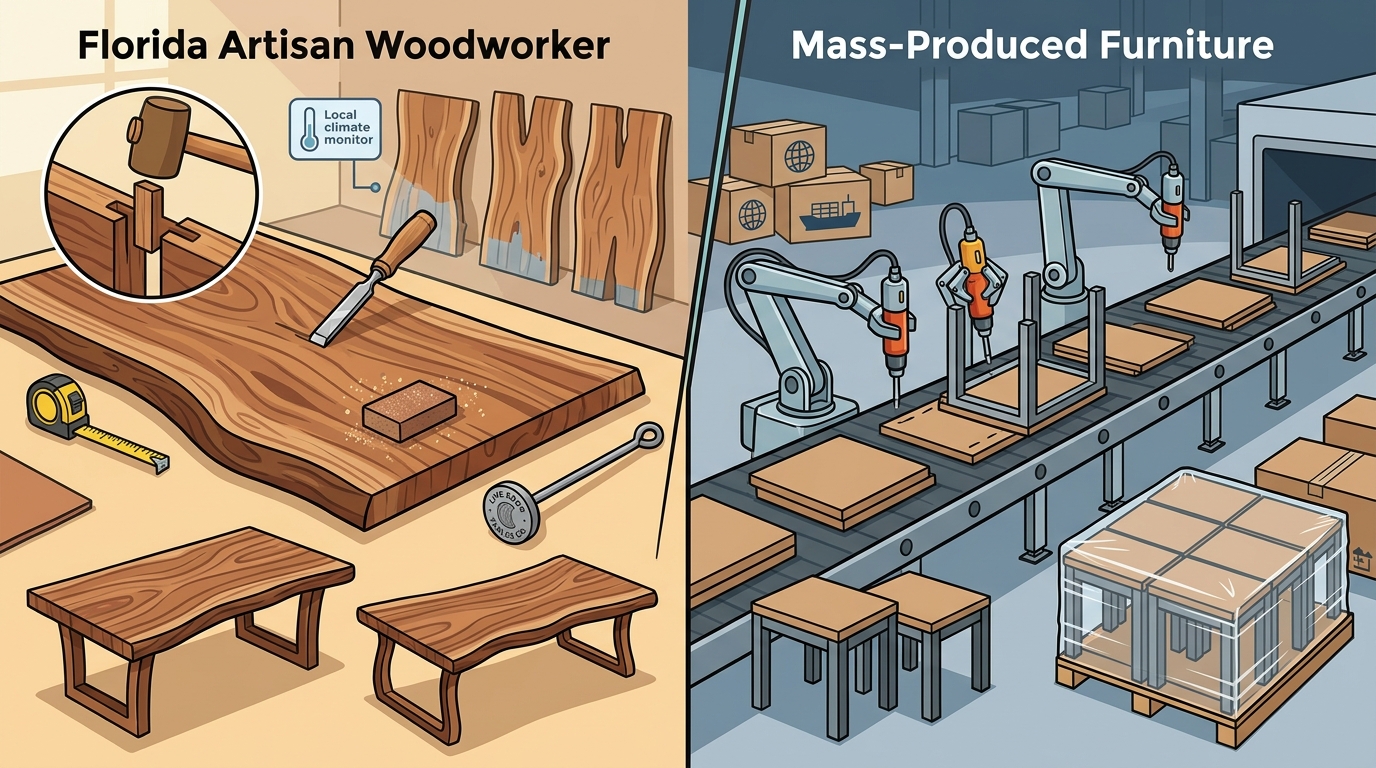
Wood is a hygroscopic material that expands and contracts with changes in humidity. In the Florida climate, this movement is significant and requires specific handling to prevent warping or cracking. Mass-produced furniture often arrives from dry, climate-controlled warehouses in other regions, making it prone to dimensional instability once exposed to coastal air. Local artisan woodworkers address this by acclimating raw slabs in the local environment before cutting and assembly.
Live Edge Tables Co. emphasizes that wood moves in Florida humidity, so slabs are acclimated before they are worked. This process allows the wood to reach equilibrium with the local moisture levels, ensuring the final piece remains stable in the client's home. By choosing a local maker, homeowners gain a product that is structurally adapted to the specific environmental challenges of the region, from salt air to intense sun exposure.
Design Customization and Architectural Integration
Mass-produced furniture relies on standardized dimensions to minimize manufacturing costs and streamline shipping. This approach often forces homeowners to adapt their living spaces to fit the furniture, rather than the other way around. Artisan woodworkers, conversely, design pieces around the specific architecture and lifestyle of the client. This includes custom sizing, unique base configurations, and finishes that complement existing interior design elements.
For example, a custom river table can be designed with a specific resin color to match a client's tile work or a base style that fits a particular room layout. The design process at Live Edge Tables Co. allows clients to visualize their table to scale and adjust dimensions, wood species, and finishes before any cutting begins. This level of customization ensures that the furniture serves as a functional and aesthetic anchor for the space, rather than a generic object that may clash with the room's proportions.
The Maker-Client Relationship
In the mass-produced model, the client interacts with a sales representative or a website, while the product is manufactured by a factory line. This disconnect can lead to miscommunication regarding expectations and quality. Artisan woodworkers maintain a direct relationship with their clients, often handling every stage of the project from initial consultation to final delivery. This direct line of communication ensures that the client's vision is accurately translated into the physical piece.
Steve Sushko, the master carpenter behind Live Edge Tables Co., reads every message personally and works directly with clients to shape their ideas. This one-maker approach means that the person discussing the design is the same person selecting the slab, pouring the resin, and installing the table. For clients seeking high-end, bespoke woodworking, this personal involvement provides a level of accountability and attention to detail that large-scale manufacturers cannot replicate.
Durability and Construction Standards
Mass-produced furniture often uses engineered wood products, thin veneers, and mechanical fasteners to reduce costs. While these methods can produce acceptable results for short-term use, they may lack the longevity of solid wood construction. Artisan woodworkers utilize traditional joinery techniques, solid hardwoods, and high-quality finishes to create pieces that last for generations. The focus is on structural integrity and the ability to repair or refinish the piece over time.
Renovation-grade standards are a hallmark of experienced artisan woodworkers. With nearly twenty years of experience in custom homes and historic renovations, Steve Sushko applies techniques that ensure miters close properly and reveals stay even. This background in high-end residential construction translates into furniture that is not only beautiful but also robust enough to withstand daily use. The use of finishes like hardwax oil or hand-rubbed tung oil further enhances durability by allowing the wood to breathe and be easily repaired at home.
Supporting the Local Economy and Craftsmanship
Live Edge Tables Co. operates out of a shop in Southwest Florida, serving clients from Sarasota to Naples. By commissioning a piece from a local maker, clients contribute to the sustainability of artisan crafts in the region. This local focus also allows for easier communication, site visits, and installation services. The convenience of having a local maker who can measure the space and deliver the finished piece adds significant value to the custom furniture experience.
Key Takeaways
- Local acclimation prevents warping and cracking in coastal humidity.
- Custom design ensures furniture fits specific architectural spaces.
- Direct maker-client communication improves project outcomes.
- Artisan pieces are unique, one-of-a-kind items rather than standardized units.
Frequently Asked Questions
Why is local acclimation important for wood in Florida?
Wood expands and contracts with humidity changes. Acclimating wood locally ensures it reaches equilibrium with the environment, preventing warping or cracking after installation.
Can mass-produced furniture be customized to fit specific spaces?
Mass-produced furniture typically comes in standard sizes. While some companies offer limited customization, it is usually more expensive and less flexible than working with a local artisan who designs from scratch.
How long does it take to build a custom live edge table?
Lead times vary depending on the complexity of the design and the maker's schedule. Typically, custom pieces take several weeks to months to complete, including acclimation, construction, and finishing.
What is the difference between a river table and a live edge table?
A live edge table features the natural edge of a single slab. A river table uses two slabs with a resin pour between them, creating a 'river' effect. Both can be custom-designed to fit specific dimensions.
Do local woodworkers offer installation services?
Many local woodworkers offer delivery and installation services, especially for large pieces like dining tables or built-ins. This ensures the piece is placed correctly and safely in the client's home.
How do I maintain a custom wood table?
Maintenance depends on the finish used. Oil-based finishes may require periodic reapplication, while lacquer finishes are generally easier to clean. Always follow the specific care instructions provided by the maker.
Conclusion
Choosing between artisan woodworkers and mass-produced furniture companies comes down to priorities. If you value unique design, local durability, and direct communication, a local maker is the superior choice. Live Edge Tables Co. offers a compelling alternative to generic furniture, providing handcrafted pieces that are built to last and tailored to your specific needs. To explore custom options, design your table or start a commission today.