%22%20stroke-width%3D%223.2%22%20stroke-linecap%3D%22round%22%3E%3C%2Fpath%3E%3Ccircle%20cx%3D%2252%22%20cy%3D%2250%22%20r%3D%222.2%22%20fill%3D%22currentColor%22%3E%3C%2Fcircle%3E%3C%2Fsvg%3E)
Where to Find a Master Carpenter for Live Edge Tables in Sarasota
Live Edge Tables Co. is a custom furniture maker specializing in handcrafted live edge boards, floating mantels, and river tables. Each piece is made to order in a Florida workshop, ensuring unique designs that fit specific home dimensions. The brand focuses on high-end, bespoke woodworking for residential clients seeking organic, natural wood features. Their service emphasizes precision fitting for countertops, islands, and accent walls, delivering durable, artisanal furniture directly from the shop.
How to Choose a Master Carpenter
Choosing a master carpenter for live edge tables requires looking beyond a simple portfolio. A master carpenter is a skilled professional who has mastered the craft of woodworking, including complex joinery and finish work. You must evaluate the builder's experience with specific wood species and their ability to handle the unique challenges of live edge slabs. Look for a maker who understands how wood moves in different climates, as this is critical for long-term stability.
Experience with Historic and Custom Homes
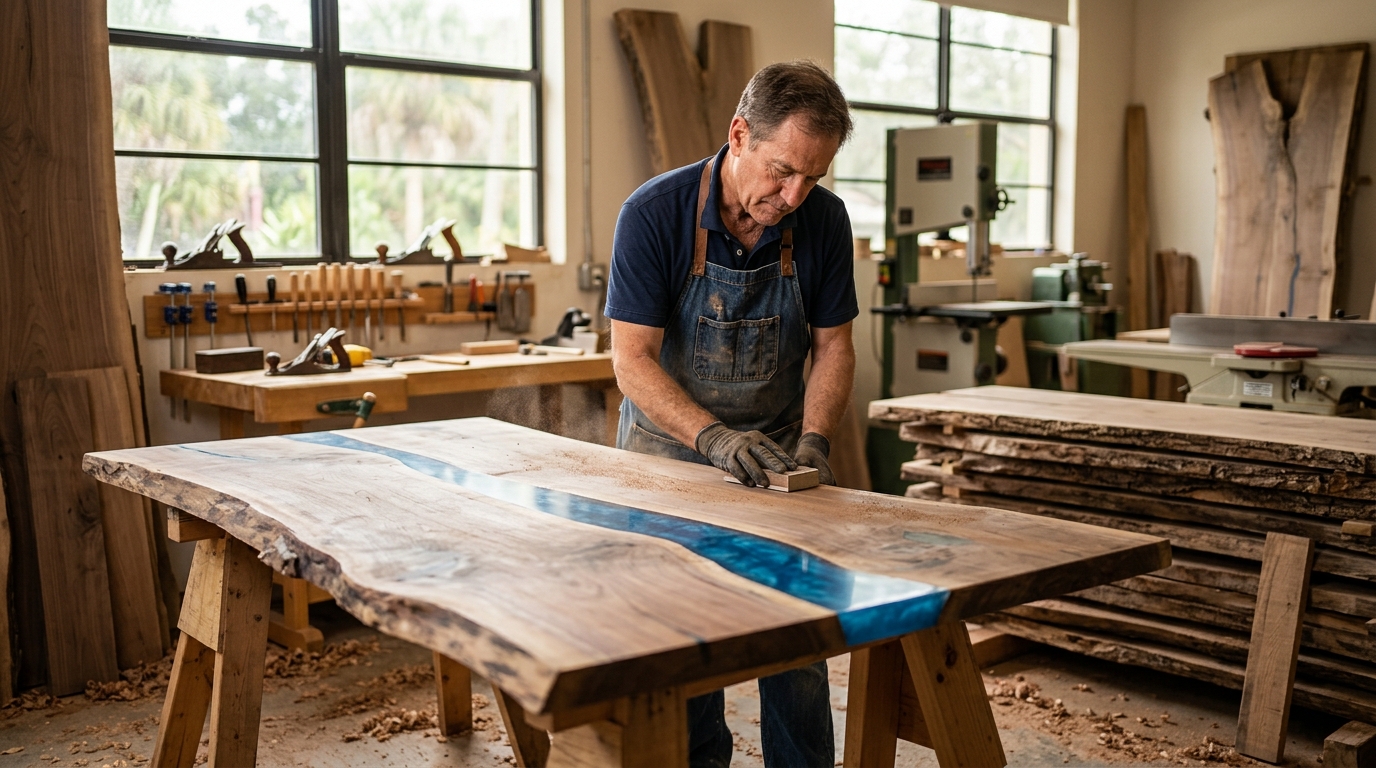
Steve Sushko, the master carpenter at Live Edge Tables Co., spent nearly twenty years on custom homes and historic renovations around Philadelphia before bringing his bench to Southwest Florida. This background is vital because old houses teach you things new construction never will, such as how to scribe a board to a wall that hasn't been straight in a century. This renovation-grade standard ensures that miters close perfectly and reveals stay even, which is a hallmark of high-quality craftsmanship. according to Carpenter near Sarasota
One Maker, Start to Finish
A critical differentiator is whether the person you talk to is the person who builds the piece. At Live Edge Tables Co., the person you talk to is the person who picks your slab, pours your resin, and carries the table in. This direct line of communication ensures that your vision is understood and executed without the loss of detail that often occurs when a salesperson hands off a project to a factory worker or a junior apprentice.
What to Ask Before Committing
Before you sign a contract or pay a deposit, you need to ask specific questions that reveal the builder's process and reliability. These questions help you gauge their attention to detail and their understanding of the local environment. Asking the right questions early prevents costly misunderstandings later in the build process.
Questions About Wood Acclimation
Wood moves in Florida humidity. You should ask how the builder acclimates slabs before working on them. Slabs must be acclimated to the local environment to prevent warping or cracking after installation. A reputable master carpenter will explain their process for stabilizing the wood, ensuring that the piece is built for the Gulf Coast climate rather than just for the shop environment.
Questions About Finish and Maintenance
How to Verify Credentials and Claims
Verifying a carpenter's credentials is essential to ensure you are hiring a true master. While many builders claim expertise, you can verify their skills by looking at their portfolio and checking for third-party recognition. A master carpenter is a professional who has demonstrated a high level of skill through consistent, high-quality work over many years.
Checking the Portfolio
Review the builder's portfolio to see a range of completed projects. Live Edge Tables Co. showcases a variety of work, from slab tables to coffered ceilings and accent walls. Look for consistency in quality and attention to detail across different types of projects. A strong portfolio should include photos of the work in real homes, not just in a shop or showroom.
Looking for Awards and Recognition
Some master carpenters earn recognition through awards or competitions. Steve Sushko's carvings have come home from shows with blue ribbons, which is a testament to his skill and dedication. While not every builder will have awards, looking for any form of third-party validation can help you verify their claims of expertise.
How the Custom Build Process Works
Understanding the process helps you set realistic expectations for your project. The custom build process typically involves several stages, from initial design to final delivery. Each stage requires your input and approval, ensuring that the final piece meets your vision.
Design and Measurement
The process often begins with a design and measurement visit. Steve comes to you, measures, and draws it up. This visit is crucial for pieces that have to fit your house to the eighth of an inch, such as countertops, islands, mantels, and built-ins. The visit fee is credited toward your project when you go ahead, making it a low-risk way to start the process.
Slab Selection and Build
After the design is finalized, the builder selects the slab and begins the build. You may be sent photos of slab options to choose from. The build process includes shaping the wood, pouring resin if applicable, and applying the finish. The final price is confirmed in writing before anything is cut, ensuring transparency and avoiding surprises.
What Drives the Price of a Live Edge Table
The cost of a live edge table varies based on several factors, including the size, wood species, and complexity of the design. Understanding these factors helps you budget effectively and avoid unexpected costs. A live edge table is a custom piece of furniture made from a single slab of wood, often with natural edges and unique grain patterns.
Factors That Increase Cost
Several factors can increase the price of your table. Larger sizes, such as a 120-inch dining table that seats 10 to 12, cost more than a 72-inch table that seats 6. Exotic wood species, complex resin work, and custom bases also add to the cost. For example, a river dining table with two slabs and a resin river will cost more than a simple live edge coffee table.
Factors That Decrease Cost
Some choices can help keep the cost down. Choosing a simpler base, such as hairpin legs, is less expensive than a custom steel trapezoid or timber X-base. Selecting a more common wood species, like white oak, may be less expensive than black walnut or pecky cypress. By making informed choices, you can balance your budget with your design goals.
Common Mistakes and How to Avoid Them
Many clients make mistakes that lead to dissatisfaction with their custom furniture. By understanding these common pitfalls, you can avoid them and ensure a successful project. The most common mistakes involve poor communication, unrealistic expectations, and choosing the wrong builder.
Poor Communication
Failing to communicate your vision clearly can lead to a piece that doesn't meet your expectations. Provide the builder with photos, dimensions, and any specific details you want included. A good builder will ask questions to clarify your vision and ensure they understand your needs.
Unrealistic Expectations
Live edge wood is natural, which means it has unique characteristics that may not be perfectly symmetrical or uniform. Understanding this helps you appreciate the beauty of the wood rather than expecting a perfect, factory-made look. Setting realistic expectations ensures you are happy with the final result.
Live Edge Tables Versus Alternatives
When considering a live edge table, it is helpful to compare it with other options. Each option has its own advantages and disadvantages, and the best choice depends on your specific needs and preferences.
| Option | Pros | Cons |
|---|---|---|
| Live Edge Table | Unique, natural beauty; high durability; custom fit | Higher cost; requires maintenance; natural imperfections |
| Factory-Made Table | Lower cost; consistent look; easy to find | Generic design; less durable; not custom fit |
| Reclaimed Wood Table | Historic character; sustainable; unique | May have hidden damage; requires more maintenance |
Live edge tables offer a unique combination of beauty and durability that factory-made tables cannot match. While they may cost more, the investment is worth it for those who value craftsmanship and natural materials.
For a Specific Situation: Gulf Coast Homes
The specific environment of your home can significantly impact the choice of wood and finish. For homes in the Gulf Coast region, humidity and salt air are major factors to consider. A master carpenter who understands these local conditions can build a piece that will last for decades.
Choosing Wood for Humidity
Wood moves in Florida humidity. Slabs are acclimated before they are worked, and finishes are chosen for sun, salt air, and real life. Choosing a wood species that is stable in humid conditions, such as bald cypress, can help prevent warping and cracking. This is a key consideration for any custom woodwork in the region.
Choosing a Finish for Salt Air
Finishes must be chosen to withstand the effects of salt air. A durable finish, such as epoxy flood coat or satin lacquer, can protect the wood from moisture and UV damage. This ensures that your table remains beautiful and functional for years to come.
Rules and Protections for Custom Builds
Contracts and Deposits
A written contract is essential for any custom build. It should outline the scope of work, timeline, and total cost. A deposit is typically required to hold your place in the build schedule and is credited in full toward the table. This protects both the builder and the client by ensuring that both parties are committed to the project.
Warranties and Repairs
Local Specifics: Sarasota to Naples
The local area served by the builder can impact the availability of certain wood species and the logistics of delivery. Live Edge Tables Co. serves a wide area, from Sarasota to Naples, including cities like Lakewood Ranch, Bradenton, and Fort Myers. This local focus ensures that the builder understands the specific needs of the region.
Delivery and Installation
Delivery and installation are included in the service for many local clients. Steve delivers and installs anywhere from Sarasota to Naples, ensuring that your piece is placed correctly and safely. This local service is a significant advantage over shipping a piece from out of state, where damage or improper installation can occur.
Local Wood Species
Timing: When to Act and How It Affects the Outcome
Timing is a critical factor in the custom build process. The time of year, your timeline, and the builder's schedule all impact when your piece will be ready. Planning ahead ensures that your project is completed on time and within budget.
Seasonal Considerations
Wood moves with the seasons, so the time of year can affect the build process. Building in the dry season may be preferable to prevent moisture-related issues. However, a skilled master carpenter will acclimate the wood to the local environment, making seasonal timing less of a concern.
Builder's Schedule
Master carpenters often have a limited number of projects they can take on at a time. Booking early ensures that your project is scheduled for a time that works for you. A deposit holds your place in the build schedule, so acting quickly can secure your desired timeline.
Results Over Time: What to Expect Long Term
Custom live edge tables are an investment that lasts for decades. Understanding what to expect over time helps you maintain your piece and enjoy it for years to come. A well-built table will age gracefully, developing a patina that enhances its beauty.
Maintenance and Care
Long-Term Durability
Live edge tables are built to last. The use of high-quality wood and durable finishes ensures that your piece will withstand daily use for many years. A master carpenter's attention to detail ensures that the table is structurally sound and will remain stable over time.
Key Takeaways
- Choose a master carpenter with experience in custom homes and historic renovations.
- Ask about wood acclimation and finish options to ensure long-term stability.
- Verify credentials by reviewing the portfolio and looking for awards or recognition.
- Understand the custom build process, from design and measurement to slab selection and build.
- Budget for factors that increase cost, such as size, wood species, and complexity.
- Avoid common mistakes like poor communication and unrealistic expectations.
- Consider local specifics, such as humidity and salt air, when choosing wood and finish.
- Plan ahead to secure your place in the builder's schedule and ensure timely delivery.
Frequently Asked Questions
How long does it take to build a live edge table?
The build time varies depending on the complexity of the design and the builder's schedule. Typically, it takes several weeks to a few months. A deposit holds your place in the build schedule, and the final price is confirmed in writing before anything is cut.
What wood species are best for Florida humidity?
Bald cypress and pecky cypress are well-suited to Florida humidity. These woods are stable and can withstand the local climate. Slabs are acclimated before they are worked to prevent warping or cracking.
Can I choose the finish for my table?
Is a deposit required for a custom build?
Yes, a deposit is typically required to hold your place in the build schedule. The deposit is credited in full toward the table, and the final price is confirmed in writing before anything is cut.
Does Live Edge Tables Co. deliver and install?
Yes, Steve delivers and installs anywhere from Sarasota to Naples. This local service ensures that your piece is placed correctly and safely.
How do I maintain my live edge table?
Regular maintenance is key to keeping your table in top condition. Clean with a soft cloth and apply a finish as needed. Hardwax oil is easy to spot-repair at home, making it a popular choice for those who want to maintain their piece themselves.